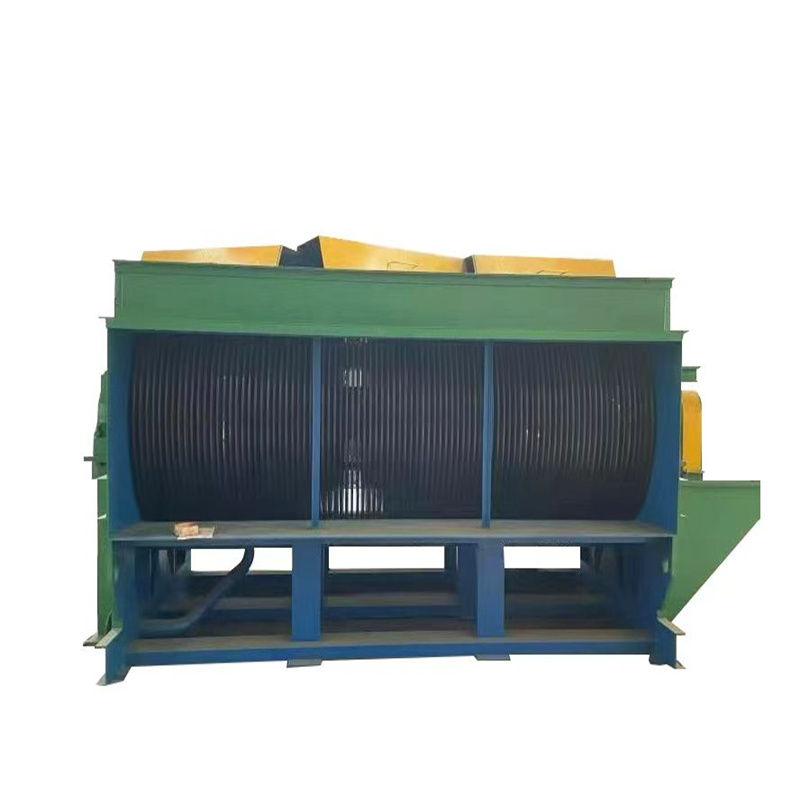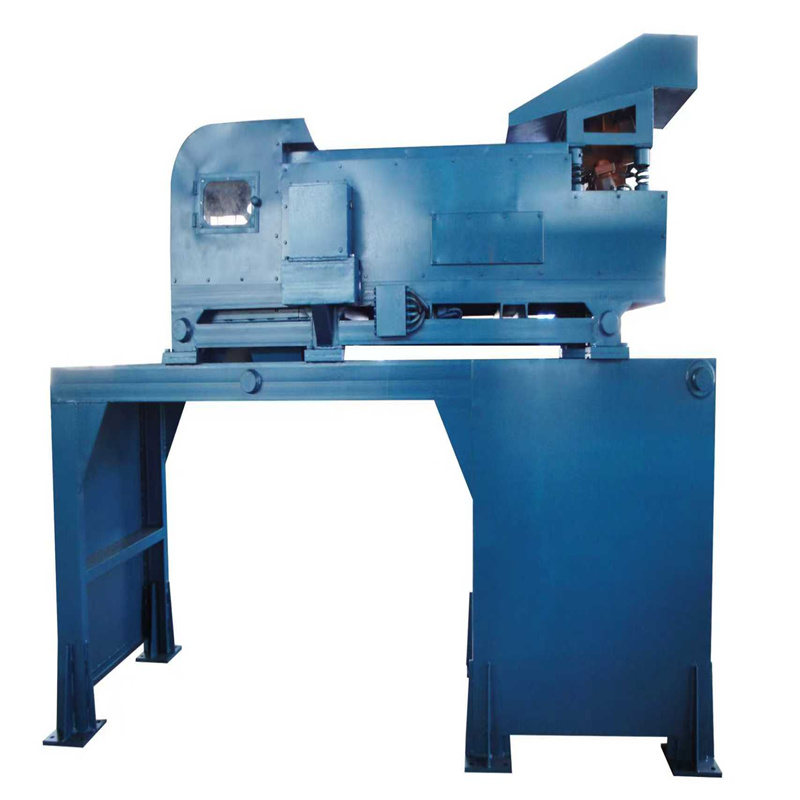

Permanent magnetic self-unloading iron remover

  • Permanent magnetic self-unloading iron remover
  • video
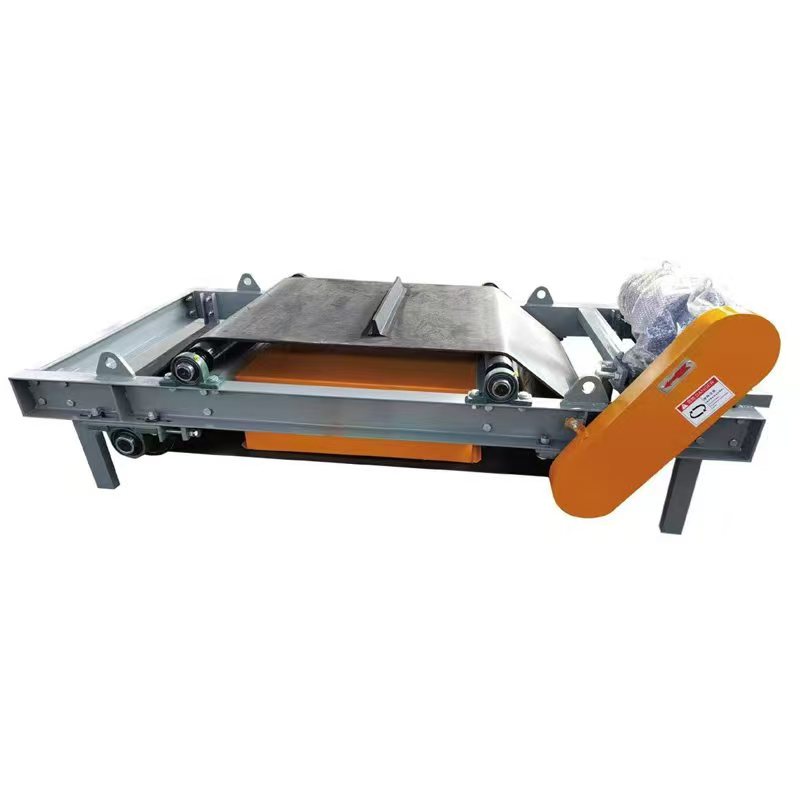
    It is composed of high-performance permanent magnet core, discarded iron belt, reduction motor, frame, roller and other parts, and is used in conjunction with various conveyors.

    Main Features:

    The permanent magnetic self-unloading iron remover consists of a high-performance permanent magnet core, a discarding belt, a reduction motor, a frame, and a roller. It is designed for use with various conveyors. It automatically removes ferromagnetic materials weighing 0.1-25 kg from non-magnetic materials. Its internal magnetic circuit utilizes computer simulation design and a sophisticated dual-pole structure, ensuring trouble-free, long-term operation in harsh environments.

    Application:

    This system consists of a high-performance permanent magnet core, a discarding belt, a reduction motor, a frame, and a roller. It is used with various conveyors to automatically remove ferromagnetic materials weighing 0.1-25 kg from non-magnetic materials.

    Advantages:

    The internal magnetic circuit utilizes computer-simulated design and a comprehensive dual-pole structure, ensuring trouble-free, long-term operation in harsh environments.

    Technical Parameters:


    Model

    Adaptable bandwidth
    mm

    Rated lifting height
    mm

    Magnetic field strength
    ≥mT

    Material Thickness
    ≤mm

    Drive Power
    kw

    Adaptation

    Belt speed
    ≤m/s

    Working system

    weight
    kg

    Dimensions


    A

    B

    C

    D

    E


    RCYD(C)-5

    500

    150

    70

    80

    1.5

    2.5

    continuous

    750

    1900

    710

    935

    950

    753


    RCYD(C)-6

    600

    175

    70

    120

    1.5

    920

    2050

    710

    1020

    1050

    753


    RCYD(C)-6.5

    650

    200

    70

    150

    1.5

    1200

    2050

    728

    1020

    1200

    888


    RCYD(C)-8

    800

    250

    70

    200

    2.2

    1400

    2250

    750

    1300

    1350

    1090


    RCYD(C)-10

    1000

    300

    70

    250

    3.0

    2120

    2650

    889

    1550

    1450

    1335


    RCYD(C)-12

    1200

    350

    70

    300

    4.0

    3350

    2860

    1010

    1720

    1550

    1515


    RCYD(C)-14

    1400

    400

    70

    350

    4.0

    4450

    3225

    1050

    1980

    1800

    1755


    RCYD(C)-16

    1600

    450

    70

    400

    5.5

    6200

    3350

    1180

    2160

    1950

    1850


    RCYD(C)-18

    1800

    500

    70

    450

    5.5

    8100

    3580

    1210

    2450

    2200

    2130


    RCYD(C)-20

    2000

    550

    70

    500

    7.5

    9700

    3800

    1300

    2700

    2400

    2410


    • How to remove iron from molten aluminum?

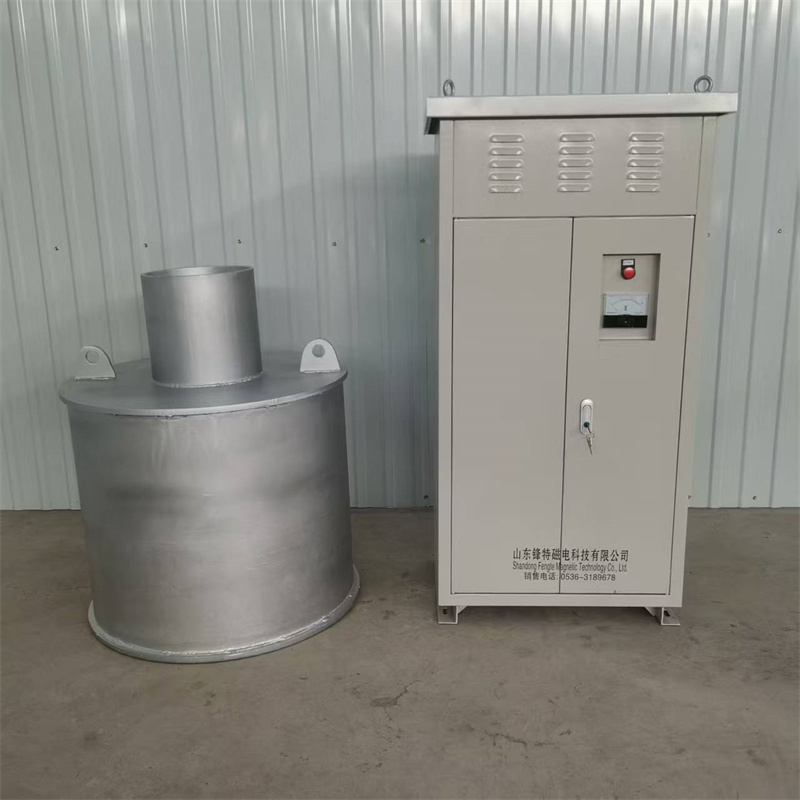
      Working Principle and Applications of High-Temperature Iron Removers: In the aluminum alloy smelting industry, particularly in the recycling and melting of aluminum, recycled aluminum products are melted in furnaces. Under high temperatures, these aluminum products liquefy into molten aluminum. However, iron-containing magnetic materials present in the scrap aluminum also melt, significantly increasing the iron content in the molten aluminum and leading to substandard products. To address these issues, our company has introduced high-temperature iron removers that can be immersed into aluminum melting furnaces to extract ferromagnetic objects. This solution effectively resolves the problem of excessive iron content in finished products caused by insufficient removal of magnetic materials during the initial stages of sorting.

    • What products does your company produce?

      Our company is a professional technology enterprise specializing in the research, development, production, and sales of magnetic equipment. We help customers solve the challenges of iron removal and recovery in various environments. Our products include iron removers, magnetic separators, and magnetic agitators. We have achieved remarkable success in numerous fields, including mining, food processing, non-mining impurity removal, non-ferrous smelting, magnetic conveying, power and building materials, coal mining, and docks. We also provide supporting services for numerous large-scale magnetic equipment and are committed to becoming your most trusted long-term partner.

    • How does a permanent magnetic stirrer work? What are its advantages?

      Permanent magnetic stirring utilizes the magnetic field generated by permanent magnets to achieve contactless stirring of non-ferrous metal liquids. Permanent magnetic stirrers are based on the principle of asynchronous motors. They are analogous to a motor with a large air gap and a permanent magnet magnetic field. The magnetic inductor acts as the motor's stator, and the non-ferrous metal solution acts as the rotor. The interaction between the magnetic field and the non-ferrous metal liquid in the melt pool generates an induced potential and an induced current. This induced current, in turn, interacts with the magnetic field to generate an electromagnetic force, which propels the non-ferrous metal liquid in a directional motion, thus stirring it. The stirring speed and interval can be adjusted to suit the specific non-ferrous metal liquid. By alternating forward and reverse rotations, the non-ferrous metal liquid is stirred, generating eddy currents and turbulence, achieving a fully uniform stirring effect. Because the magnetic field of a permanent magnetic stirrer is derived from a permanent magnet, it is a very energy-efficient stirring method, with operating costs as low as one-tenth that of an electromagnetic stirrer.

    • How does a magnetic stirrer work? What is its function?

      The magnetic stirrer uses a magnetic field that penetrates the furnace bottom and insulation material, acting on the liquid metal and stirring it non-contact. This helps to achieve uniform alloy composition, reduce burnout, lower energy consumption, accelerate melting, and eliminate temperature differences.

    • What is the working principle of AC/DC electromagnetic stirring device?

      An AC/DC electromagnetic stirring device uses the principle of electromagnetic induction to generate a magnetic field that acts on molten aluminum, causing it to move in a regular pattern. The electromagnetic stirring device primarily consists of a variable-frequency power supply and an inductor. The variable-frequency power supply converts 50/60Hz AC power into a two-phase or three-phase low-frequency power supply with a frequency of 0.8 to 3.5Hz. This power supply then passes a low-frequency current through the inductor, the main component of the electromagnetic stirring device, to create an alternating traveling-wave magnetic field. This traveling-wave magnetic field penetrates the stainless steel plate and lining at the furnace bottom and acts on the molten aluminum. The magnetic field induces an induced potential and current in the molten aluminum. This induced current interacts with the magnetic field to generate an electromagnetic force, causing the molten aluminum to move in a regular pattern, achieving the desired stirring effect. By varying the direction and intensity of the traveling-wave magnetic field, the stirring direction and intensity of the molten aluminum can be effectively adjusted.

    • How does a DC mixer work?

      The DC electromagnetic stirrer, located at the bottom of the furnace, utilizes a two-stage DC inductor. A motor drives the coil to achieve stirring. This non-contact stirring prevents contamination of the alloy solution. Under the influence of magnetic force, the upper solution fills the lower solution, creating vertical convection and stirring. This minimizes the temperature difference between the upper and lower parts of the alloy, reduces burnout, and ensures uniform alloying.

    Get the latest price? We will reply as soon as possible (within 12 hours)